
An avid collector
This spring I had the pleasure of spending some time exploring the fascinating Cryer Collection of scrapbooks and manuscript volumes held by Wakefield Local Studies Library, as I undertook a scoping project to evaluate the condition and significance of the collection.
The accumulation of the collection is attributed to John Cryer (c.1781-1864), a second generation stationer and bookseller who traded in Ratton Row, Wakefield. Little is known about Cryer the person. There is conflicting information around his date of birth, there is no evidence he married, and the censuses show he made enough money from his business to employ a servant1.
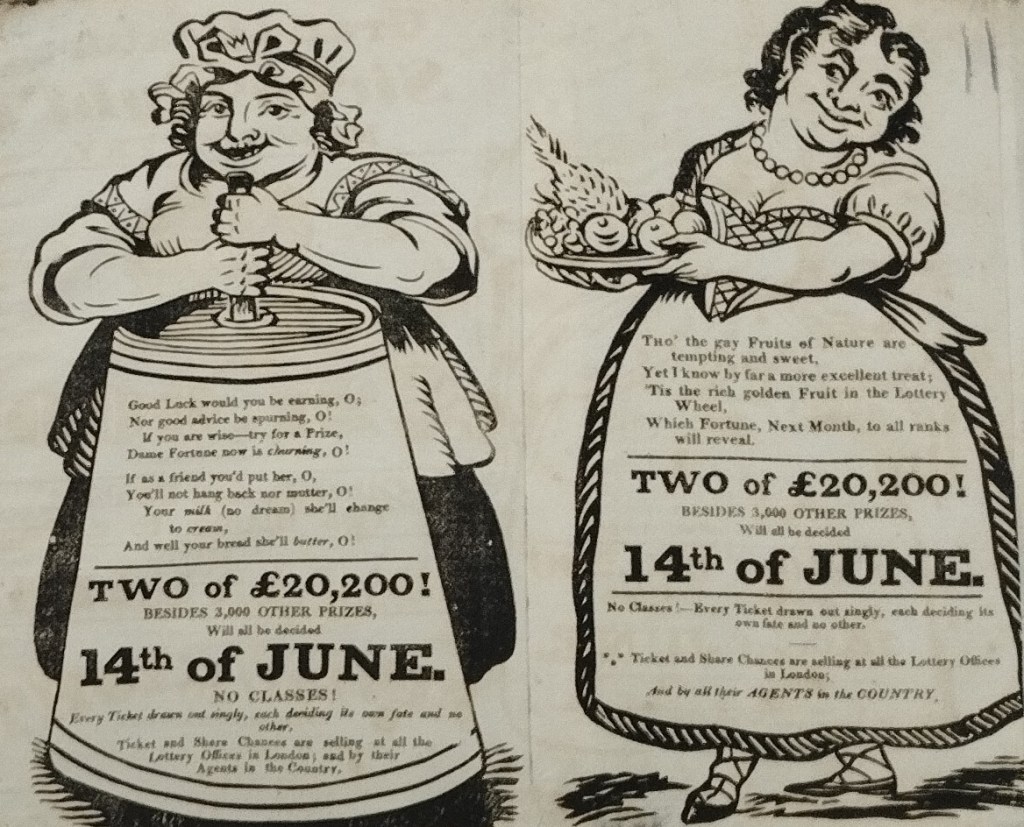
Most of what we know comes from the survival of this substantial collection of around 67 volumes. We know Cryer gathered and kept paper ephemera; flyers, handbills, posters and press cuttings. The prevalence of certain themes suggest either his own interests, or that he considered certain topics more worthy of capturing for posterity. These include election posters, material relating to book selling and publishing, entertainment posters, particularly for circuses, and non-conformist ephemera such as preaching plans.
However Cryer did not focus on specific themes. He seems to have captured anything that caught his imagination, from book inscriptions, to advertisements for tea, to illustrated plates of biblical scenes.
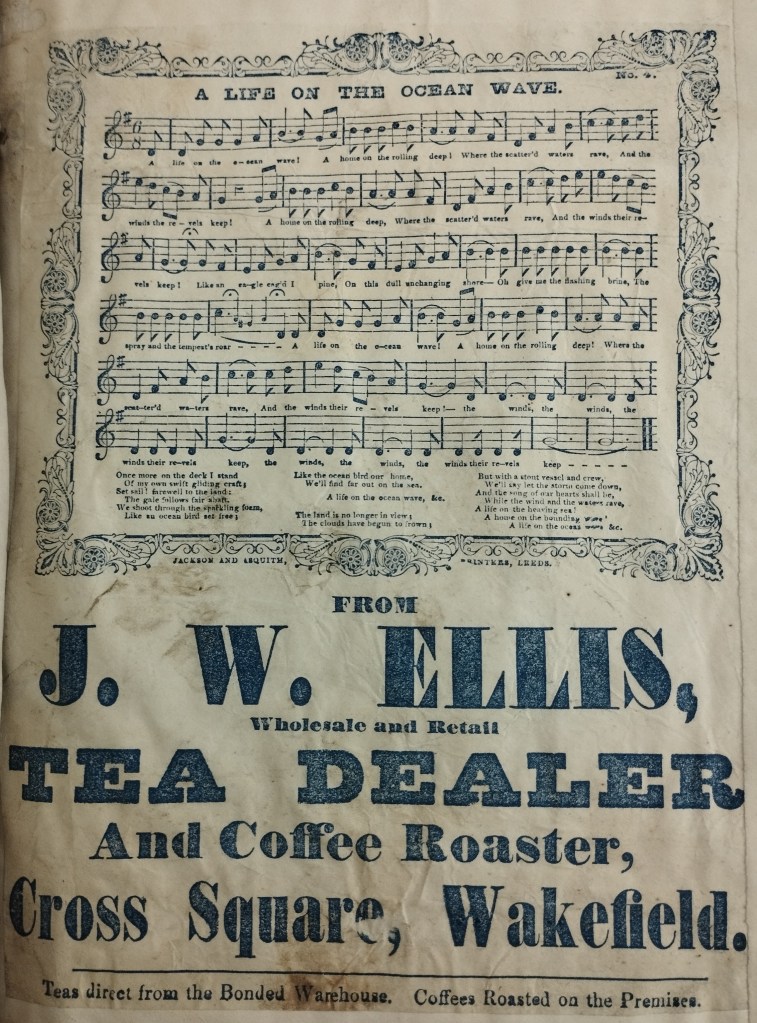
We know that he took the care to paste much of the content he collected into volumes with spacers – inserts designed to protect the volume’s binding from stress arising from the text block expanding as items were added. We are fortunate too that the adhesive he used has survived well, without damaging the paper.
Material of this nature was never meant to last more than a day or two. Its purpose was to share information quickly and widely. The high cost of paper in this period meant such items would often be re-purposed to other uses such as food wrap (after which it would understandably be discarded!). So the survival of these items, thanks to Cryer’s careful collecting and collating, and the library’s safe storage, is rare.
A social commentator
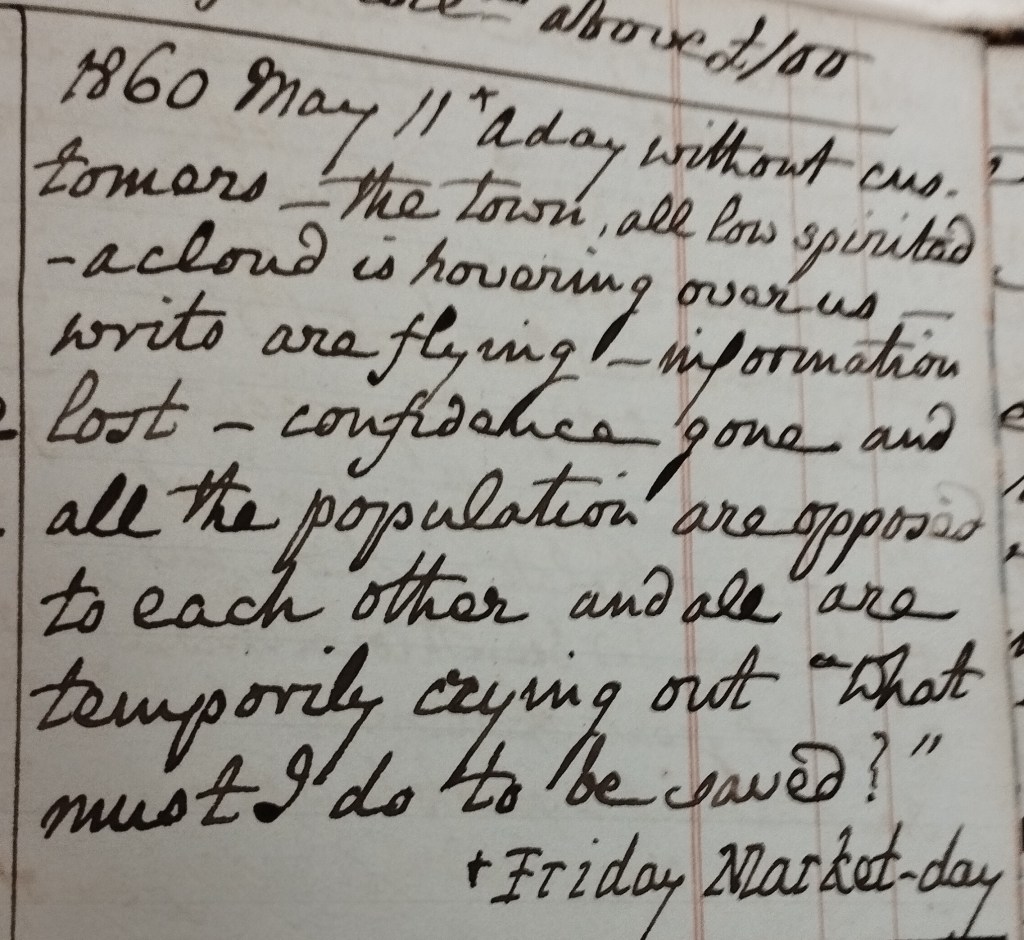
As well as the printed ephemera, Cryer captured content in manuscript. In some instances this means content copied from published sources, but it also includes Cryer’s personal observations and records of life in 19th Century Wakefield.
These comments bring a unique richness to the material. We are taken on a walk through Wakefield Market Place in 1835, to discover not only the establishments which existed, but their political leanings in the upcoming election2. We learn that May 1860 left the town in a state of ‘low spiritedness’ following a market day with no customers, and Cryer’s feelings on being told of a woman who’d worn a fashionable crinoline to a meeting of the Society of Friends (“She had to bend it before she sat down – disgusting?”).
The project
After spending some time with the Cryer Collection, and other scrapbook volumes held at Wakefield Local Studies, I was able to shed some more light on what is contained in this substantial collection, how best to continue to keep it safe into the future through effective collections care and best practice, and suggestions on how it might be enjoyed by more people.
“We have learnt so much about our collection through Alex’s exemplary work and it has given us a great platform to build on.“
Rebecca Spence, Wakefield Council.
You can find more images from the Cryer Collection on Wakefield Local Studies Library’s image gallery, Twixt Aire and Calder.
Footnotes
- Information taken from Steve Ward (2018) Nineteenth Century Circus Poster Art
- Discussed further in K. Navickas, Wakefield, http://protesthistory.org.uk/wakefield
 AGH Archives
Leave a comment